
How to Start Journaling: A Simple Guide for Beginners
New to journaling? This beginner-friendly guide will help you understand what journaling is, how to start, what to write, and how to make it a habit that actually feels useful.
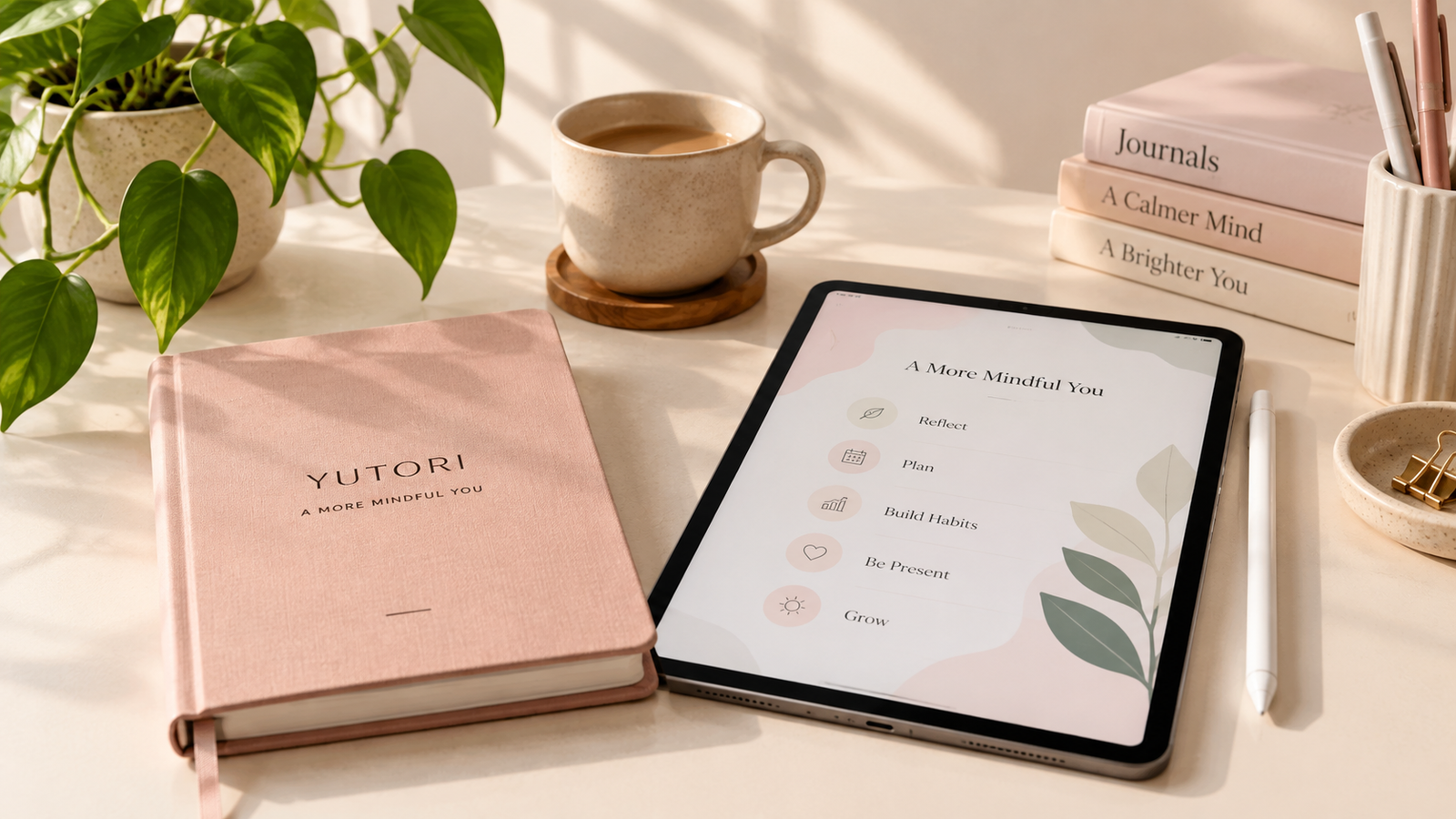
Journaling doesn’t have to be complicated.
A lot of people like the idea of journaling, but get stuck at the very beginning. You open a fresh page, pick up your pen, and suddenly have no idea what to write.
Maybe you think a journal needs to be beautifully written. Maybe you worry that you will not keep up with it. Or maybe you simply do not know what journaling is supposed to look like.
The good news is that there is no single correct way to do it. Journaling can be a few honest lines about your day, a place to untangle a difficult thought, a list of things you want to remember, or simply somewhere to put what is on your mind.
This guide will walk you through how to start journaling in a simple, realistic way, especially if you have never journaled before or have tried and stopped.
You do not need to write perfectly. You only need somewhere to begin.
What is journaling?
Journaling is simply the practice of putting your thoughts, feelings, experiences, ideas or plans into words. It can be structured or completely free-form.
Some people journal to process emotions. Some use it to organise their thoughts, track habits, remember meaningful moments or make sense of a busy day. Others simply enjoy having a private space where they can write without needing to explain themselves to anyone.
A journal does not need to sound polished, insightful or profound. It can be as simple as:
- three things that happened today
- something you are worried about
- a goal you want to work towards
- a moment you do not want to forget
- a question you are trying to answer
The point is not to create perfect writing. The point is to give your thoughts somewhere to go.
Your journal does not have to impress anyone. It only has to feel like a space you can return to.
Why is journaling worth trying?
Journaling is useful because it creates a small pause between what you are feeling and what you do next. Writing things down can make thoughts that feel tangled in your head a little easier to look at.
You may notice patterns that are easy to miss when everything stays in your mind. You might realise what has been draining your energy, what has been making you happy, or what you keep saying you want but never make time for.
Over time, a journal can also become a record of your life. Looking back at old pages can show you how your priorities, habits and perspective have changed.
A few simple reasons people journal
To clear their mind
Writing things down can help turn a busy stream of thoughts into something more manageable.
To understand themselves better
Journaling can help you notice recurring feelings, reactions, needs and priorities.
To remember more
Small moments are easy to forget. A journal gives you somewhere to keep the ones that matter.
To make progress visible
Goals, habits and personal changes often feel slow. Looking back can make progress easier to recognise.
Wanting five quiet minutes to yourself is reason enough.
How to start journaling
If you are completely new to journaling, the easiest way to begin is to make it feel smaller than you think it needs to be.
You do not need a special routine, a perfect notebook or thirty uninterrupted minutes. You only need a place to write and a few quiet moments.
Here is a simple way to get started.
Choose where you want to journal
Start with the format that feels easiest for you to return to. That might be a physical journal, a digital journal on your tablet, or even a simple notes app.
If you enjoy the feeling of pen on paper, a physical journal can feel calming and intentional. If you prefer convenience, editing, portability or writing with a stylus, digital journaling may suit you better.
There is no better option. The best journal is the one you will actually use.
Start with five minutes
One of the easiest ways to make journaling feel overwhelming is to decide that every entry has to be long.
Instead, give yourself five minutes. Write one paragraph, a few bullet points or even one honest sentence.
Starting small makes it easier to come back tomorrow.
Write about what is already on your mind
You do not need to search for something meaningful to write about. Start with whatever is taking up space in your head right now.
A simple sentence starter is often enough to get past the blank-page feeling.
Let the writing be imperfect
Your journal is not an assignment. You do not need perfect grammar, neat handwriting or a clever conclusion.
If your thoughts jump from one subject to another, let them. If you change your mind halfway through a sentence, write that too.
The more permission you give yourself to write badly, the easier it becomes to write honestly.
Choose a loose time to return to it
You do not need to journal at exactly the same time every day, but it can help to connect journaling with something you already do.
- after your morning coffee
- before going to bed
- after work or college
- during your weekend reset
- whenever your mind feels especially full
Think of this as a gentle cue rather than a strict rule.
Start with these three lines:
Right now, I feel…
The main thing on my mind is…
One thing I want to remember from today is…
What should you write in a journal?
This is one of the most common questions beginners have, and the answer is simpler than it sounds: write about what feels most present for you.
Your journal does not need one fixed purpose. Some days it might hold your worries. On another day it might be a list of ideas, a memory, a plan, a question or something you are grateful for.
If you are not sure where to begin, these are a few easy directions you can take.
Write about your day
What happened, what stood out, what felt difficult and what you want to remember.
Write about how you feel
Name the emotion, what may have triggered it, and what you need right now.
Write about a goal
What you want, why it matters to you, and one small next step you can take.
Write about a memory
Capture a moment, conversation, place or feeling you would like to keep.
Write about what is worrying you
Putting a worry into words can make it feel more specific and less overwhelming.
Write about something good
It could be something big, or something as small as a good cup of coffee or a kind message.
Start by writing, “I do not know what to write today.” Then write the next sentence that comes to mind.
20 beginner journaling prompts
Journal prompts can be useful when you want to write but do not know where to begin. You do not need to answer every question or work through them in order.
Choose the one that makes you pause for a second. That is usually a good place to start.
How am I really feeling today?
What has been taking up most of my mental space lately?
What is one thing I need more of right now?
What is one thing I need less of?
What made me smile recently?
What am I avoiding, and why?
What would make this week feel a little better?
What am I proud of myself for?
What am I currently looking forward to?
What is something I wish I had said?
What is one habit I would like to build?
What do I want my mornings to feel like?
What do I want my evenings to feel like?
What is one memory I never want to forget?
What has been giving me energy lately?
What has been draining my energy?
If I could make one thing easier right now, what would it be?
What would I like to thank myself for?
What do I want to remember about this stage of my life?
What is one small thing I can do for myself tomorrow?
If your writing takes you somewhere completely different, follow it. The prompt did its job.
How often should you journal?
There is no rule that says journaling only works if you do it every day.
Some people enjoy writing daily. Others journal a few times a week, once on the weekend, or only when they need to process something.
If you are a beginner, it is usually better to choose a rhythm that feels realistic instead of setting a strict daily goal that becomes another thing to feel guilty about.
A few minutes every day
Good if you enjoy routines and want to notice small changes in your thoughts, mood or habits.
Flexible but consistent
A helpful middle ground if daily journaling feels too demanding but you still want a regular practice.
Use your journal as a tool
Write when your mind feels full, when you need clarity, or when something feels worth remembering.
A journal you return to occasionally is still a journal that is working for you.
Common journaling mistakes beginners make
Most people do not stop journaling because they are “bad at it.” They stop because they accidentally make it harder than it needs to be.
Trying to write too much
You do not need to fill multiple pages every time. A short entry can be just as useful.
Waiting for something important to happen
Ordinary days are worth writing about too. In fact, they are often the pages you appreciate most later.
Trying to make every page look perfect
Pretty pages can be fun, but aesthetics should not become a reason to avoid writing.
Forcing yourself to journal every day
Missing a day does not mean you failed. You can come back whenever you want.
Judging what you write
Your journal is allowed to be repetitive, emotional, uncertain and unfinished.
You are not creating a perfect record of your life. You are creating a place where you can be honest.
Digital vs physical journaling: which is better?
One of the first choices you may make is whether you want to journal on paper or digitally.
Both can work beautifully. The difference is mostly about what feels natural in your everyday life.
For people who love pen and paper
A physical journal can create a sense of pause. There are no notifications, tabs or screens competing for your attention.
- tactile and personal
- easy to disconnect from screens
- enjoyable for handwriting and doodling
- becomes a physical keepsake
For people who like flexibility
Digital journaling can be convenient if your tablet, phone or laptop is already part of your daily routine.
- portable and easy to access
- useful with a stylus on a tablet
- easy to edit or reorganise
- paperless and simple to store
You also do not have to choose only one. Some people keep a physical journal for slower reflection and use a digital journal for planning, prompts or writing on the go.
If you are curious about both, you can explore Yutori journals and planners in digital and physical formats.
If reaching for it feels easy, you are more likely to use it.
How to make journaling a habit
If you want journaling to become part of your routine, try not to rely on motivation alone. Make it easy to begin.
The smaller the starting point, the easier it is to return to. A habit grows more naturally when there is less pressure around it.
Keep your journal easy to reach
Leave a physical journal somewhere visible, or keep your digital journal pinned somewhere easy to open.
Attach it to something you already do
Journal after coffee, before bed, during your evening reset, or whenever you naturally have a quiet moment.
Keep the minimum very small
One sentence still counts. A small habit is easier to repeat than an ambitious one.
Use prompts when you feel stuck
You do not have to generate a meaningful topic every time. A simple prompt can make starting much easier.
Let yourself miss days
Missing a day, a week or even longer does not erase the habit. Just return when you feel ready.
Make the journal feel like yours
Use the format, colours, prompts, layouts and style that make you want to come back to it.
Make it easy to start and easy to return.
Final thoughts: your journal can be whatever you need it to be
Learning how to start journaling is less about finding the perfect method and more about finding a way of writing that feels comfortable enough to continue.
You can write every day or once in a while. You can use a beautiful physical journal, write digitally with a stylus, keep pages neat, fill them with messy thoughts, follow prompts or ignore prompts entirely.
Your journal can change with you too. What begins as a place to write about your day might later become somewhere you track goals, reflect on habits, collect memories or simply clear your head.
If you are starting today, do not worry about creating the perfect first page.
Write one true sentence. Then see where it takes you.
Find a journal that feels like yours.
Explore Yutori journals and planners in digital and physical formats, made for reflection, planning, habits and everyday life.